

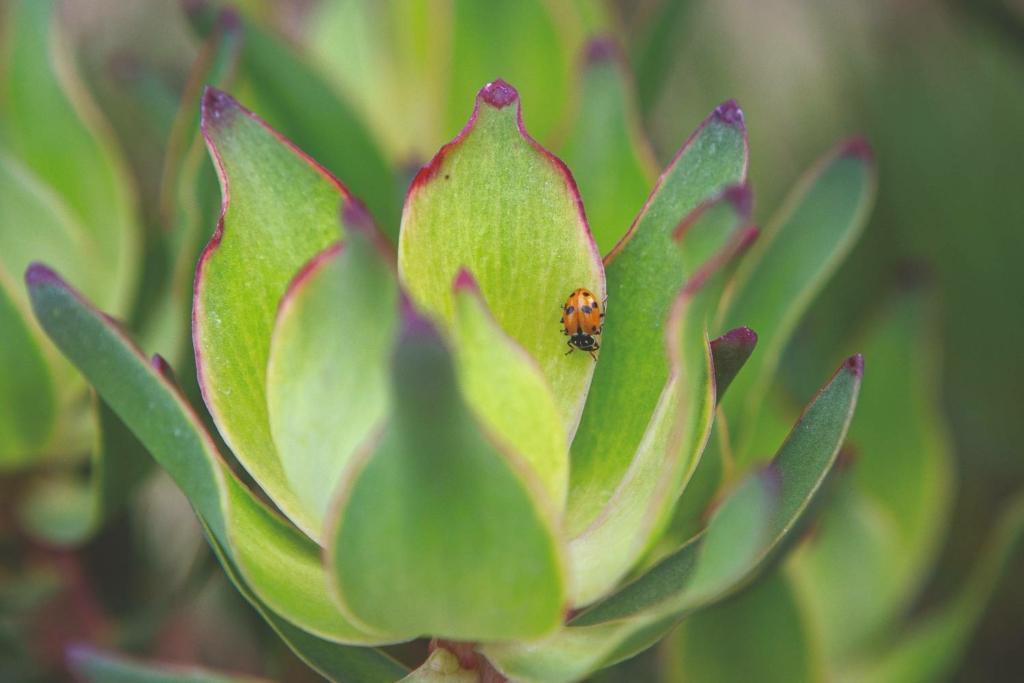
THE CELEBRITIES OF THE INSECT WORLD
The image of a ladybird has been adopted by filmmakers, fashion houses, wine labels, and book publishers and is one of the first insects that small children recognise.
Ladybirds come in all shapes and sizes, and several species are found in South Africa. They are known to dine almost exclusively on insects we consider pests, like aphids. Ladybirds lay hundreds of eggs in aphid colonies, and as soon as the larvae hatch, the larvae immediately start feeding. The larvae can grow up to two centimetres long over six weeks. When the larvae are fully grown, they form pupae. It takes three to seven days for the pupae to develop into adult ladybirds. These beneficial insects also consume fruit flies and mites.
Unfortunately, the indiscriminate use of pesticides and the arrival of the Asian harlequin ladybird threaten native species. The Asian harlequin ladybird outcompetes and actively feeds on other ladybirds, leaving them in trouble and needing protected areas.
Interesting Facts
– Collective noun: A loveliness of ladybirds
– Afrikaans name: Lieweheersbesie
– The scientific name for ladybugs, coccinellid, comes from the Latin word for scarlet, coccineus
– They are historically considered by many to be a good luck charm to it generally considered a helpful insect.
– A ladybird may eat up to 5000 aphids during its lifetime
– They play dead to protect themselves
– They hibernate in winter
– Their spots serve as a warning that they taste terrible
– They are also referred to as ‘ladybugs’ but are more closely related to beetles than to bugs