

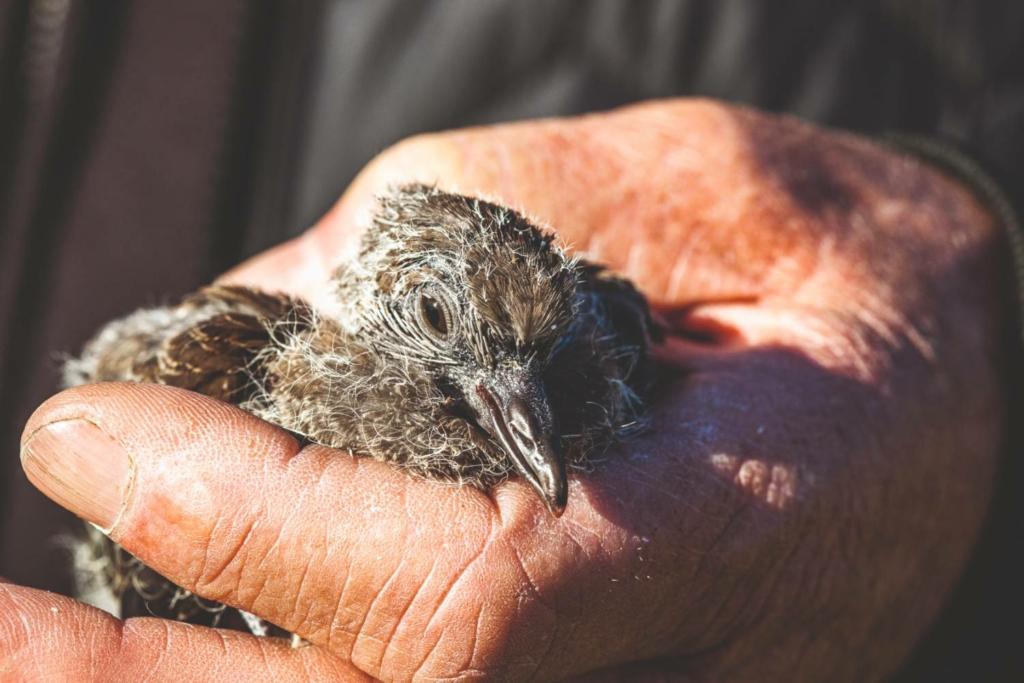
RESCUING BABY BIRDS
While orphaned fledglings exist, it is uncommon for bird parents to abandon their young.
When birds are born, some are covered in down and are immediately active. These members of precocial species include spurfowl, ducks and lapwings, and because they are highly mobile but in constant danger from cats, dogs and vehicles, they are kept under the watchful eye of their parents 24/7. Altricial species give birth to naked and blind nestlings that need to remain in the nest where parental care is critical to their survival.
Once feathers emerge on altricial youngsters, they are called fledglings and find themselves at a stage where they start exercising their wings. Once the wings are strong enough, the youngster may leave the nest. Unfortunately, this exposes them to threats as they are not yet strong enough to defy gravity and also not savvy enough to identify a potentially dangerous situation.
At this stage, well-intentioned people may also try to ‘rescue’ the fledgling. This, however, should not be attempted as not only does it put the youngster in distress, but more often than not, the parents are close at hand and still care for it. That is not to say that moving a fledgling to a safer place is a bad idea – for example, out of a road – and please do so by all means (the old tale of ‘if you touch a young bird, the parents will desert it’, is false). However, the best idea is to leave it alone and monitor the situation.
On occasion, fledgling parents may desert it if the youngster is sick or physically impaired. In these cases, the youngster rarely survives, even if rescued. If the parents are killed, it is difficult for the youngster to survive alone, so this is the one case where a rescue is called for. Taking care of a rescued fledgling is a specialised business and is best left to a rehabilitation centre. It is illegal to keep wild birds in captivity without relative permits. All too often, such birds are fed an incorrect diet and die from malnourishment, become habituated to their carer, and end up as a problem or meet an untimely end.
If you find a nestling (pink and alien-looking without feathers) that has fallen out of the next by accident, look for the baby’s nest in nearby bushes or trees; if you find it, simply put the chick back.