

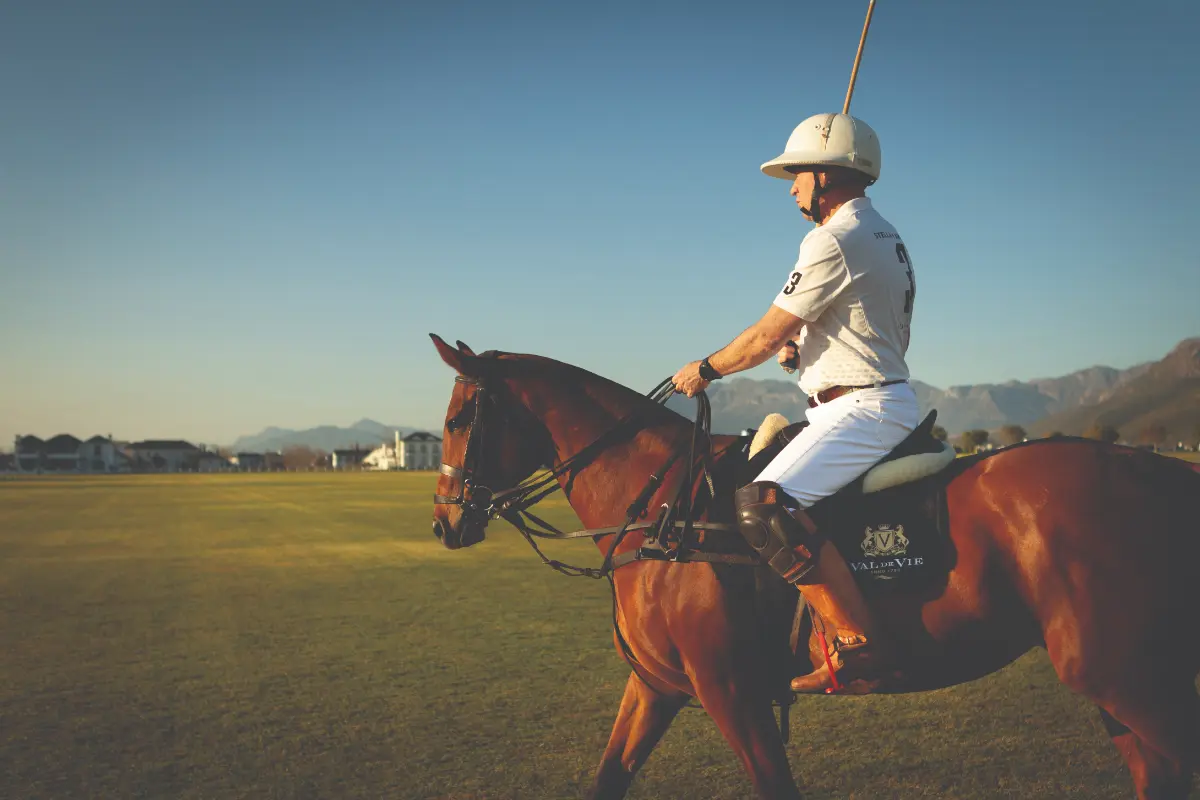
In Good Stride
The horse (Equus caballus), known in Afrikaans simply as a perd, has a sporting role at Val de Vie Estate. With the 2026/27 polo season now underway, this edition takes a closer look at the polo pony or poloponie.
Speed, balance and a steady temperament are essential in a polo pony. It must keep its composure among other horses, stop sharply and change direction to follow the ball. Quick responses allow its rider to move into position for a shot or challenge an opponent.
Regular schooling teaches the pony to respond to its rider’s cues. The rider, in turn, learns the horse’s strengths and how best to work with them. Conditioning builds the fitness needed for repeated bursts of activity, with rest allowing recovery between exercise periods.
Away from the field, appropriate feeding, fresh water, grooming and hoof care support the horse’s health. Grooms are closely involved in this daily routine and can notice changes in appetite, movement or behaviour that may need attention.
During a match at Val de Vie Estate this season, watch how a pony adjusts its stride as its rider prepares for a shot. The control required to give the player a stable striking position is one of these equine athletes’ less obvious skills.
Five Fun Facts
A name that stayed
Most polo ponies are horse-sized. The name comes from earlier rules that limited the height of horses allowed to play.
Different bloodlines
Polo ponies come from several breeds. Thoroughbreds, Quarter Horses, Argentine Polo horses and their crosses are among those used in the sport.
Ready for Play
Polo ponies have closely clipped manes and plaited, tied-up tails to keep hair from becoming tangled with the reins or mallet during a match.
Recognition of their own
Best Playing Pony awards honour outstanding equine performances at important matches and tournaments.
Dressed for protection
The bandages and boots worn on a pony’s legs help protect against contact with the ball.