Home is Where the Eggs are
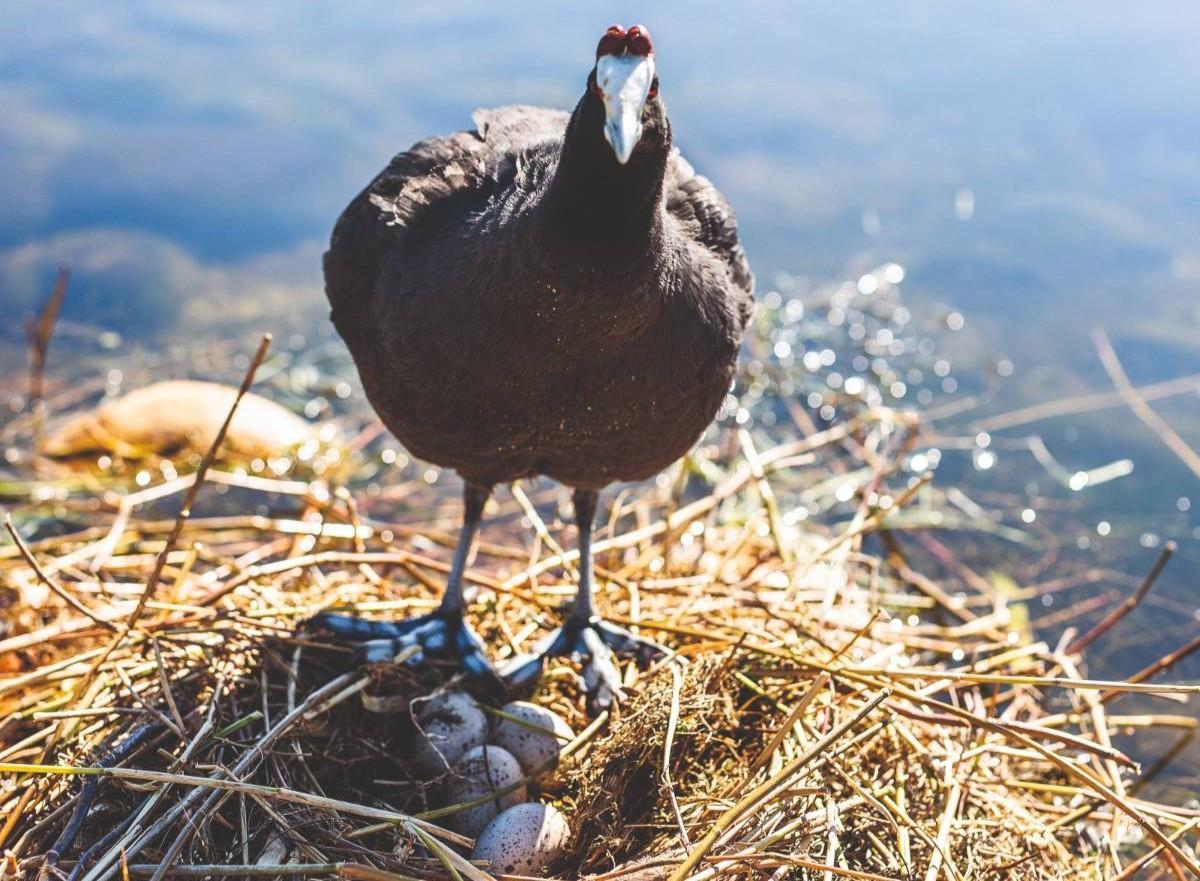
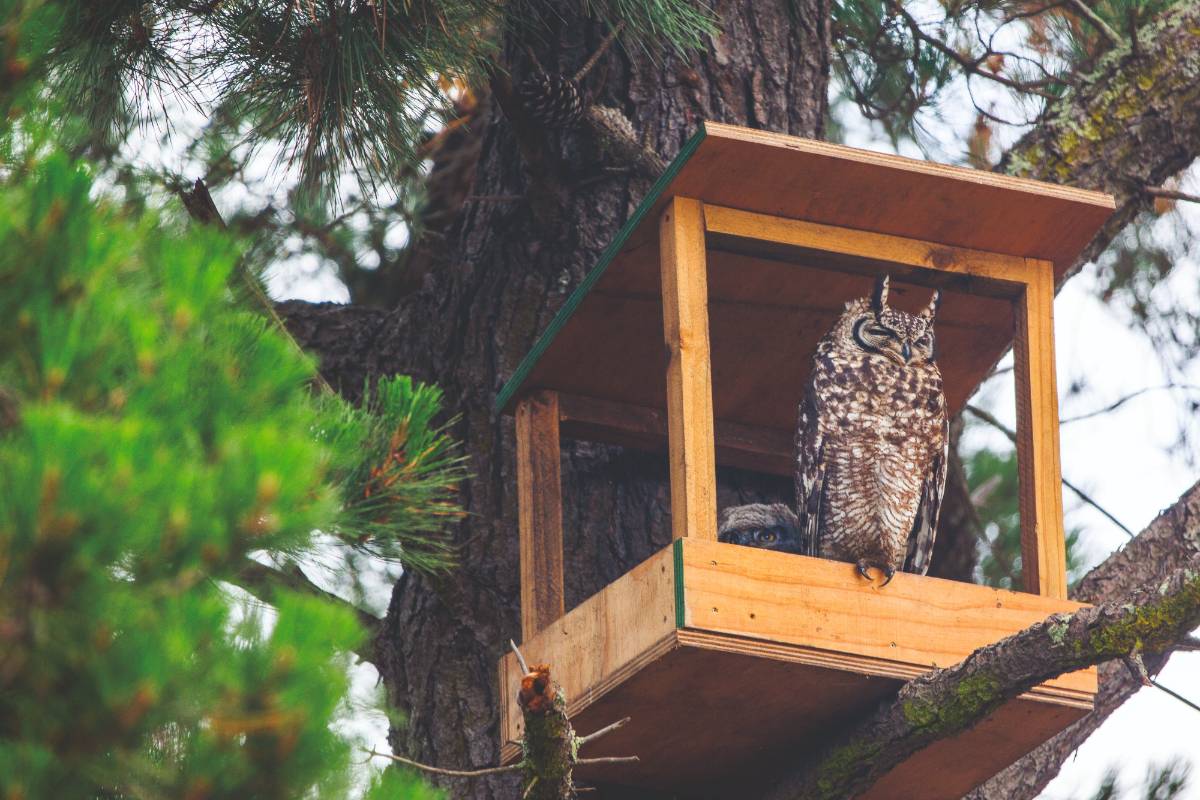
The most obvious example of an organism having a “property” is the bird’s nest, a safe place where a bird lays its eggs until they hatch. Residents might notice that the definition doesn’t include the word structure, simply because different species of birds have varying ideas of what a nest should be.
Several ground-dwelling birds, such as lapwings and plovers, lay their eggs on the ground. The eggs are highly camouflaged, blending into the surrounding pebbles and rocks. Occasionally, when the parent bird leaves the nest to feed or drink, it may even cover the eggs with soil for extra protection, further concealing them from view. Interestingly, the eggs of ground nesters are usually pointed at one end, ensuring the eggs roll in a circle rather than straying too far.
Some birds, like the ostrich, take a more energetic approach by scraping a shallow hole in the ground in which to store the eggs, keeping them from rolling away.
Doves and pigeons use a slightly more structural approach; a few twigs on a tree branch or ledge are considered adequate to support the eggs and nestlings. When strong winds pick up, these nests don’t always hold, which is why it’s not unusual to see their chicks ending up in rehab. On a larger scale, many raptors use branches to form a more substantial platform for their nests.
Thicket-dwelling birds usually build a classic bowl-shaped nest, the typical one that most people are familiar with. The shape of the nest keeps the eggs from rolling and is often tucked safely high up in shrubs and trees, which helps protect them.
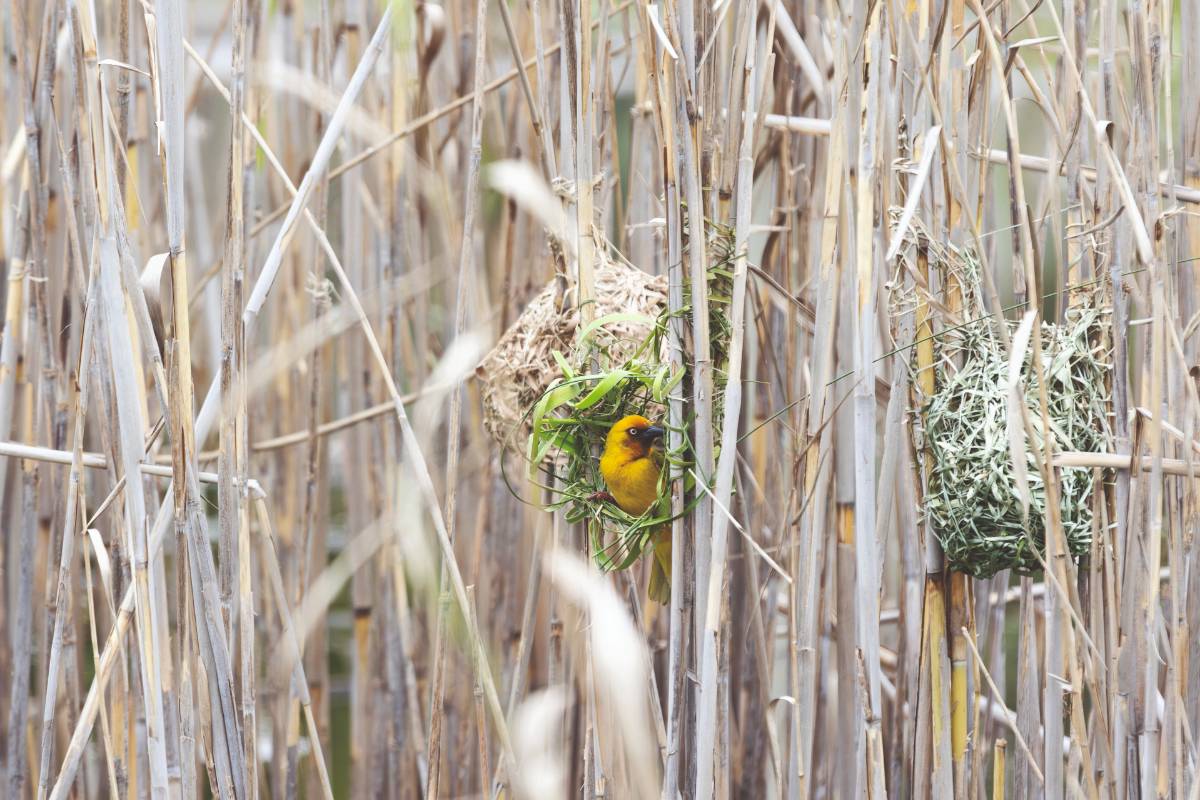
Some bowl nests are even roofed over to protect the parent bird from the sun and rain. Many finches use this pattern. Perhaps the best-known of these nests are the woven nests of weavers and bishops, often considered by naturalists as the most complex nest made by any bird. The hamerkop also builds a roofed nest, adding to the structure over the years, which can cause some of these nests to eventually weigh up to five tons, making them the heaviest nests built by any single bird.
And then there are the swallows, martins and swifts, who use a completely different approach altogether; their nests are made of mud mixed with saliva and are usually attached to surfaces like rock faces, natural overhangs or the more easily accessible concrete overhangs of buildings.