

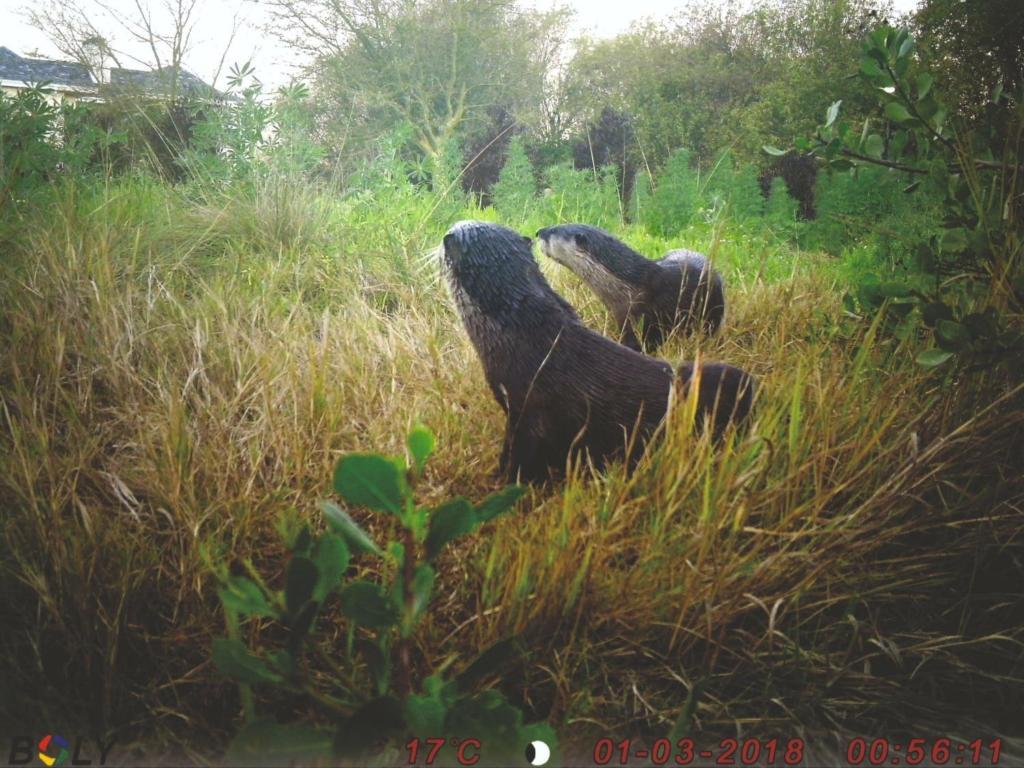
OTTERLY ADORABLE
The Cape clawless otter (Aonyx capensis) is the second-largest freshwater otter species and is called the Groot otter in Afrikaans. Val de Vie Estate residents have shared numerous images and videos of charming otters in and around the freshwater dams on the Estate.
Otters are shy and elusive mammals and spotting them is considered rare. However, they are intelligent and playful by nature and co-exist in groups of up to eight females and their offspring. Male otters play no part in rearing the young and seldom associate with females.
The best time of day to spot an otter on the Estate is at dawn or dusk when they are most active. Fish is a favourite food among otters, but they also consume various amphibians (such as salamanders and frogs), freshwater clams, insects, crabs and small birds.
It is difficult to keep up with these quick swimmers; therefore, the Cape clawless otter does not have many predators. Outside of the Estate, their significant threats are pythons and crocodiles.
DID YOU KNOW?
A group of otters is called a bevvy.
Despite their name, the species is not completely clawless. It does have small claws on its back feet, which are webbed and used to groom itself.
Otters have dextrous hands.
They are semi-aquatic, which means they split their time between water and land.
They grow to a maximum of 2m and can weigh up to 18kg.
They have elaborate vocalisations ranging from whistles, grunts and a variable “hah”. The “Hah” expresses unease, while the whistles are used when calling each other.
Cape clawless otters are regarded as a near-threatened species.